

Rider Assistance Technology Guide for Safer Rides
- Shiny Side Up Info
- Jul 8
- 5 min read

A car drifting into your lane is not giving you extra time because you are on two wheels. That is exactly why a rider assistance technology guide matters now. Modern systems are no longer gimmicks bolted onto bikes. The right setup analyses traffic movement in real time, warns you about threats you may not see, and helps you stay focused on the road ahead.
For many riders, the problem is not skill. It is visibility, reaction time and the fact that other road users often miss motorcycles entirely. Rider assistance technology is built to reduce that gap. It does not replace judgement or training, but it can add a critical layer of awareness where it counts most.
What rider assistance technology actually does
On a motorcycle, assistance technology needs to work differently from a car system. Bikes lean, filter through traffic, change lane position for visibility and operate in tighter margins. That means the best systems are designed around rider behaviour rather than adapted from automotive hardware.
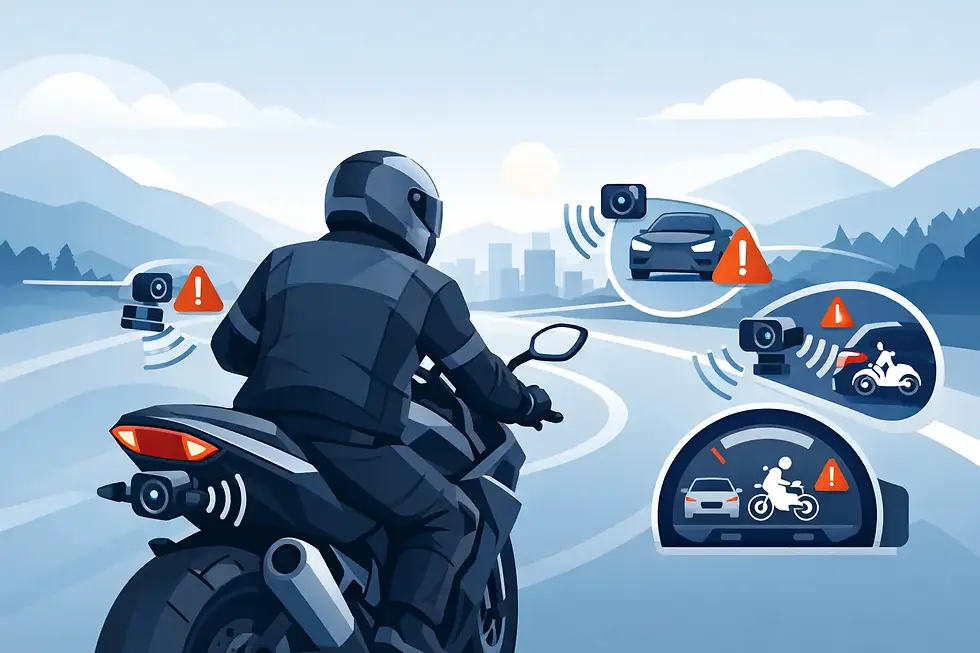
At its core, rider assistance technology uses cameras, sensors and onboard processing to monitor what is happening around the bike. It then turns that information into immediate alerts. Depending on the system, those alerts may cover blind spots, forward collision risk, unsafe overtakes and following distance issues.
That sounds simple, but the difference is in how quickly and accurately the system interprets the road. A useful alert must arrive early enough to act on, yet not be so frequent that riders start ignoring it. Good technology finds that balance.
A practical rider assistance technology guide to key features
If you are comparing systems, start with the features that affect everyday riding rather than marketing labels. The first is blind spot detection. This helps when a vehicle sits just outside your natural line of sight, especially on multi-lane roads or during overtakes. For riders, that warning can be the difference between a clean lane change and a sudden evasive move.
Forward collision alerts are just as important. Traffic compresses quickly, particularly in urban commuting or poor weather. A system that tracks closing speed and warns you early can buy valuable reaction time. It will not stop the bike for you, and that is often a good thing. Most riders want support, not interference.
Rear threat awareness also deserves more attention than it usually gets. Many riders focus on what is ahead, but tailgating and aggressive overtakes from behind are common risks. A motorcycle-specific system that watches the rear approach can improve your positioning and help you prepare before a situation becomes urgent.
Ride recording is another feature with practical value. If there is an incident, recorded footage may help establish what happened. It can also help riders review habits, road positioning and close calls. The benefit here is not just documentation. It is feedback.
Mobile app integration matters too, but only when it is useful. Riders do not need an app stuffed with clutter. They need clear setup, ride review, alert settings and system status. If the app helps you understand your riding data without distracting from the ride itself, it adds real value.
Why motorcycle-specific design matters
This is where many systems separate themselves. A motorcycle moves through traffic in ways a car does not. It leans through bends, occupies changing lane positions and is more exposed to weather, vibration and variable mounting conditions.
A rider assistance system built specifically for bikes accounts for that. Wide-angle front and rear cameras, compact hardware and alert logic tuned to motorcycle movement all matter. So does installation flexibility. Riders own sport bikes, adventure bikes, tourers, cruisers and commuters. A system should fit different machines without becoming a workshop project.
The same goes for privacy and processing. Some riders are understandably cautious about connected devices. Systems that process video and threat analysis on the device itself, rather than relying heavily on cloud handling, can offer more control and reassurance.
What these systems can and cannot do
The strongest reason to use rider assistance technology is simple. It improves situational awareness. That is especially valuable in dense traffic, on long-distance rides and in the stop-start rhythm of daily commuting.
Still, there are trade-offs. No alert system can see every threat perfectly in every condition. Heavy rain, glare, road spray and unusual traffic behaviour can affect performance. Riders should treat technology as a second set of eyes, not a substitute for mirror checks, shoulder checks and road reading.
There is also a learning curve. Alerts need to become part of your routine without becoming noise. Some riders adapt quickly. Others need time to trust the system and understand what each alert means in real traffic. That adjustment period is normal.
A well-designed system avoids being intrusive. It should inform your decisions, not override them. For motorcyclists, that distinction matters. Riding is built on control, and any technology that disrupts that control is unlikely to last.
How to choose the right system for your bike and riding style
The best choice depends on where and how you ride. A commuter dealing with busy dual carriageways and city congestion may care most about blind spot alerts and forward collision warnings. A touring rider may place more value on fatigue reduction, ride recording and consistent rear awareness over long distances.
Look closely at the warning method. Visual alerts are often preferred because they are immediate and easier to process without adding unnecessary audio clutter. You should also check camera coverage, weather resistance, compatibility with your motorcycle and how much setup is required after installation.
Ease of use matters more than riders sometimes admit. If a system is awkward to configure or unreliable after fitting, it tends to get ignored. The right product should feel integrated into the bike, not added on as an afterthought.
It is also worth asking how the system handles footage and ride data. Some riders want incident evidence only. Others want ride analytics that help them understand routes, near misses and riding behaviour over time. Neither preference is wrong. It depends on what you want from the technology.
The value of real-time threat detection
Real-time processing is where rider assistance shifts from passive recording to active protection. Recording a near miss after it happens has value. Being alerted before it develops is far more useful.
That is why camera-based systems with onboard analysis are gaining attention. They do more than capture the ride. They identify traffic patterns and road threats as they happen, then provide immediate warnings. For motorcycles, speed matters here. Delayed alerts are not much help when traffic is closing fast.
Systems such as Ride Vision 2 Pro reflect this motorcycle-first approach. With front and rear wide-angle cameras, real-time visual alerts, ride recording and app-based ride data, the focus stays where it should be - better awareness without overcomplicating the ride.
Is rider assistance technology worth it?
For riders who already invest in training, gear and bike maintenance, assistance technology is a logical next step. It addresses a part of road safety that skill alone cannot fully solve: the actions of other road users and the limits of human perception in fast-changing traffic.
That does not mean every rider needs every feature. Some will want a focused safety system with threat alerts and recording. Others will prioritise data review and evidence capture. The worthwhile investment is the one that supports your actual riding, not a feature sheet that looks impressive online.
The strongest systems earn their place by doing three things well. They analyse and alert in real time, fit the realities of motorcycle use, and stay clear enough that riders trust them every day.
Better awareness does not make you invulnerable. It gives you more chances to react early, position well and avoid being caught out by someone else’s mistake. On two wheels, that extra margin is often the one that matters most.


Comments