

Ride Vision 2 Pro Review for Safer Motorcycling
- Shiny Side Up Info
- 3 days ago
- 6 min read

A car moves into your lane without indicating. A van closes the gap behind you at a junction. Traffic ahead brakes harder than expected. These are not rare events for motorcycle riders, and they leave very little margin for error. This Ride Vision 2 Pro review looks at whether a motorcycle-specific warning system can provide useful extra awareness without taking attention away from the road.
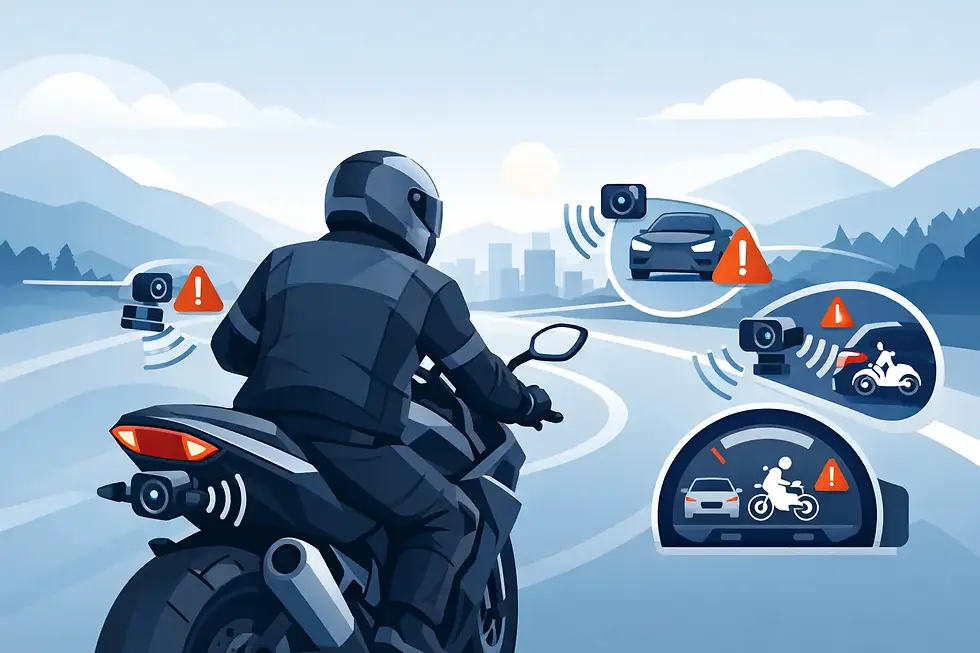
Ride Vision 2 Pro is built around a simple principle: analyse what is happening in front of and behind the bike, then warn the rider when a developing risk needs attention. It combines front and rear wide-angle cameras, onboard processing, a visual alert unit, video recording and a connected mobile app. Rather than trying to ride for you, it is designed to help you see threats sooner.
What Ride Vision 2 Pro Does on the Road
The system uses patented camera and algorithm technology developed for motorcycle behaviour. Its cameras monitor the road environment while you ride, and the onboard unit assesses traffic movement and relative distance in real time. When it identifies a relevant hazard, it sends an immediate visual alert to the rider.
The practical value is in the type of moments riders deal with every day. Blind-spot alerts can draw attention to a vehicle sitting alongside or approaching from the rear. Forward collision warnings can flag closing traffic ahead. Dangerous overtake and unsafe following-distance alerts add another layer of awareness when surrounding drivers are making poor decisions.
That matters because motorcycles are often missed, misjudged or treated as if they have the stopping distance of a car. A rider may already be checking mirrors, reading brake lights and watching road surfaces. Ride Vision 2 Pro does not replace those habits. It supports them by continuously watching areas and changing traffic conditions that are easy to miss during a busy ride.
The alerts are visual rather than intrusive audio prompts. For many riders, that is the right approach. A warning needs to be noticeable without adding unnecessary noise inside a helmet or competing with navigation, intercoms and traffic sounds. The system is intended to provide a prompt, not a stream of interruptions.
Ride Vision 2 Pro Review: Safety Features That Matter
The strongest part of Ride Vision 2 Pro is that it is motorcycle-first. Automotive driver-assistance technology often assumes a fixed cabin, a large windscreen, multiple built-in displays and predictable vehicle positioning. Motorcycles operate differently. Riders lean, filter through traffic, change lane position for visibility and face greater exposure when another road user makes a mistake.
Ride Vision 2 Pro is designed around that reality. The front and rear camera arrangement gives coverage in both directions, while the alert logic focuses on the hazards most relevant to a rider. It is not presented as autonomous technology, and that is a positive. Control remains with the rider, where it belongs.
Forward collision awareness is particularly useful in congested traffic, where sight lines can disappear behind larger vehicles. On a touring route, it can also help when fatigue begins to reduce concentration late in the day. Rear monitoring is equally valuable at roundabouts, traffic lights and slow-moving queues, where an approaching vehicle may not be leaving enough room.
There is a sensible limitation here. No warning system can fully understand every road situation. Tight bends, poor weather, heavy spray, low light, dirty camera lenses and unusual traffic movement can affect how any camera-based system interprets a scene. Riders should treat an alert as additional information, not as a guarantee that a hazard has been fully assessed.
Recording Is More Than a Dashcam Feature
Ride Vision 2 Pro also records your ride through its integrated cameras. That has obvious value if an incident occurs, but it is useful beyond collisions. Footage can help clarify what happened during a close call, document unsafe driving or provide useful evidence after a dispute.
For riders who enjoy touring or regular weekend routes, recording can also create a visual record of journeys without fitting a separate motorcycle camera system. The difference is that these cameras serve two roles: they contribute to the safety analysis while also capturing the ride.
The system processes road information on the device, which is an important consideration for privacy-conscious riders. Safety technology should support the rider without requiring every journey to be continuously sent elsewhere for analysis. App connectivity is there to make footage, settings and ride information accessible, not to turn the bike into a complicated data project.
The App and Ride Data Experience
The companion app extends the value of the hardware after the ride. It gives riders a way to access recorded video, review events and look at ride data. Used well, this can support more thoughtful riding habits. If a journey repeatedly produces warnings in a particular type of traffic, that may be a reminder to adjust following distance, route choice or positioning.
The app will appeal most to riders who want a clearer picture of how and where risk develops. It is less likely to matter to someone who only wants a basic camera. That is one of the key buying decisions: Ride Vision 2 Pro is not just a recorder. Its main purpose is active awareness while riding, with video and data as useful supporting features.
There is a learning period. Riders need to become familiar with the alert display and understand what each warning means before relying on it during demanding traffic conditions. Taking time to learn the system during familiar local rides is the sensible approach. Once the alerts become recognisable, they can feel like a natural part of the bike's information set rather than another distraction.
Installation and Everyday Use
A safety system only earns its place on a motorcycle if it fits the bike and stays dependable through regular use. Ride Vision 2 Pro is designed for installation across a wide range of motorcycles, from commuter machines to touring bikes and larger adventure models. Camera placement and alert-unit positioning need to be considered carefully so that the system has a clear view and the rider can see its warnings without looking away from the road.
Installation is not a casual accessory fitment for every owner. It involves mounting cameras, routing wiring and connecting the system correctly. Riders comfortable working on their own motorcycle may be happy to handle it, while others will prefer professional fitting. Either route, a neat installation is worth the effort. Loose wiring, poor camera angles or an obstructed lens will undermine the benefit of the technology.
Day to day, the system asks for relatively little. Keep the lenses clean, check mounts as part of normal bike maintenance and make sure you understand the alert behaviour. That is far less demanding than trying to actively monitor every blind spot through mirrors alone, especially when riding in dense urban traffic.
Who Will Get the Most Value?
Ride Vision 2 Pro makes the most sense for riders who regularly share roads with unpredictable traffic. Commuters can benefit from added awareness during stop-start journeys, lane changes and busy junctions. Touring riders may value the forward and rear monitoring over long distances, as well as the recorded footage. Safety-focused enthusiasts who already invest in quality tyres, protective kit and rider training will see it as another practical layer of protection.
It may be less compelling for someone who rides only occasionally on quiet roads and wants the cheapest possible camera. The system carries a higher purpose than basic recording, and its value depends on whether real-time alerts matter to you. It also cannot compensate for poor observation, excessive speed or following too closely. Good riding judgement remains essential.
For riders weighing the cost, consider what the system combines: active threat warnings, front and rear cameras, incident evidence, app access and ride insights in one motorcycle-specific package. Buying separate equipment may appear cheaper at first, but it will not necessarily provide integrated, real-time hazard analysis.
Rider Shield 360 Canada positions Ride Vision 2 Pro for riders who want that integrated approach without changing the character of their motorcycle. The technology works in the background, while the rider remains responsible for every decision.
The most useful way to think about Ride Vision 2 Pro is not as a substitute for mirror checks or training. It is an extra set of informed eyes for the moments when traffic becomes unpredictable. Learn the alerts, keep the cameras clear and let the system support the observation skills that keep every ride safer.


Comments