
Are Motorcycle Safety Alerts Worth It for Riders?

A car moves into your lane without indicating. A van sits just behind your shoulder in the blind spot. Traffic ahead brakes harder than expected. These are familiar moments for riders, and they happen fast. So, are motorcycle safety alerts worth it? For many riders, the answer comes down to whether a system gives useful warning early enough to support a better decision without becoming a distraction.
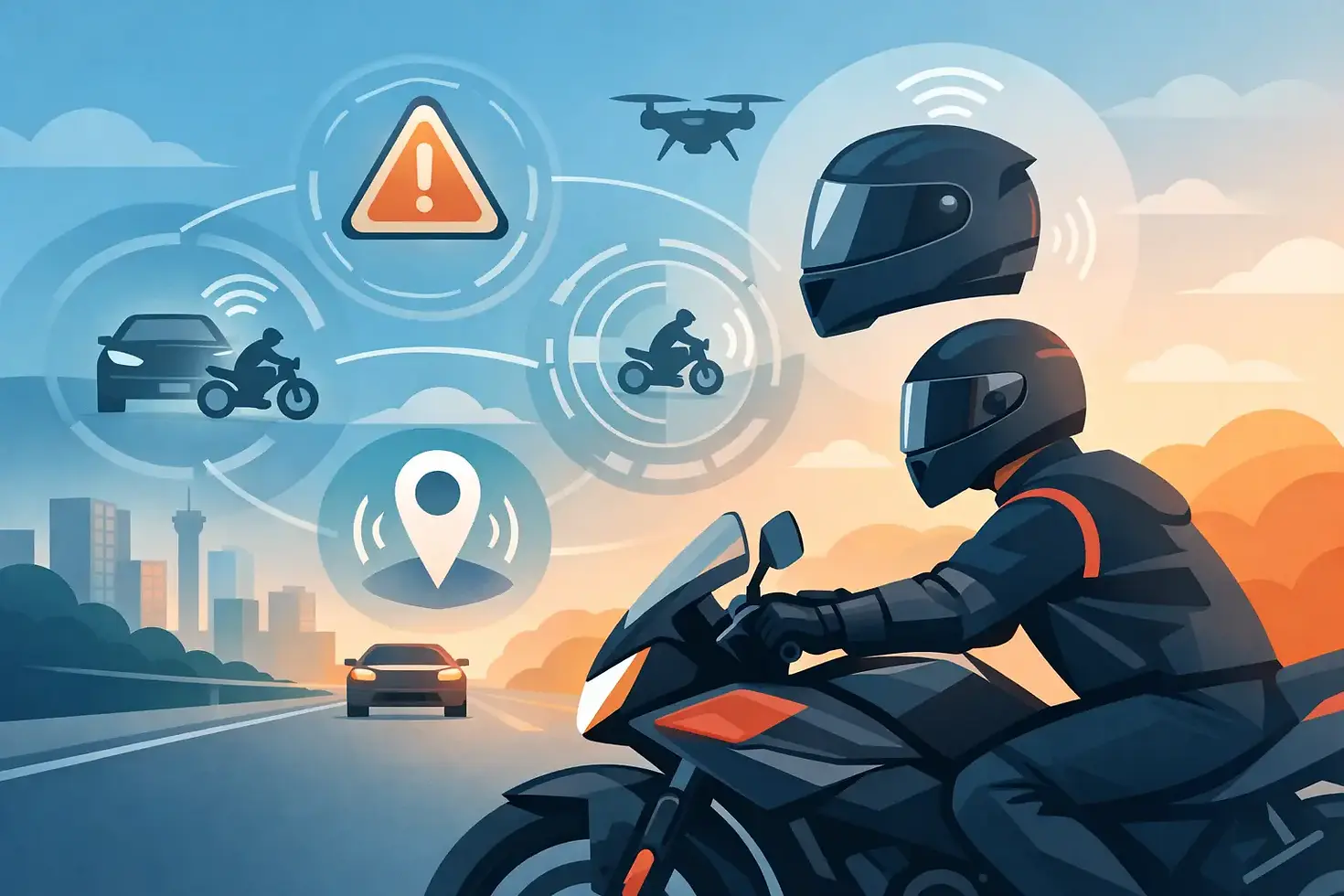
Motorcycle safety alerts are not a substitute for observation, roadcraft or leaving space. They are an additional layer of awareness designed for the moments when traffic behaviour is unpredictable and your margin for error is small. The right system helps you see more of what is developing around the bike, then delivers a clear visual alert when it detects a relevant threat.
What motorcycle safety alerts are designed to do
A motorcycle-specific rider assistance system uses forward- and rear-facing cameras with onboard processing to analyse the road around you in real time. Rather than simply recording footage, it looks for patterns that may indicate risk: a vehicle approaching too closely from behind, an object in a blind spot, traffic closing rapidly ahead, an unsafe following distance or a dangerous overtake.
When the system identifies a threat, it provides a visual warning intended to draw attention to the relevant area. This matters because mirrors, shoulder checks and forward scanning all have limits. A rider can use good habits and still face a driver who changes lanes suddenly, misjudges distance or fails to see a motorcycle.
The most useful systems are built around motorcycle movement and traffic behaviour. A car-based warning system adapted to a bike may not account for filtering, lane position, lean angle, vibration, exposure to weather or the faster visual workload involved in urban riding. Purpose-built motorcycle technology needs to recognise that riders constantly manage changing road space, not just follow a lane.
Are motorcycle safety alerts worth it in real traffic?
They can be, particularly when your riding regularly puts you among dense, fast-moving or inconsistent traffic. Commuters may benefit during repeated rush-hour routes, where drivers are changing lanes, stopping abruptly and competing for gaps. Touring riders can gain added awareness on unfamiliar dual carriageways, through busy town centres and during long days when fatigue can quietly reduce concentration.
The value is often greatest at the edges of your awareness. You may already see the vehicle ahead slowing, but an early forward-collision warning can reinforce the need to create more space. You may intend to change lanes after a mirror check, but a blind-spot alert can flag a vehicle that has moved into the space during that final moment. The alert does not make the decision for you. It gives you another timely input before you commit.
This is especially relevant on a motorcycle because riders do not have the protective structure of a car around them. Avoiding a collision is usually about recognising developing risk early, adjusting speed, changing position or choosing not to make a move. A well-timed warning supports those options.
That does not mean every rider needs the same level of technology. Someone who uses a motorcycle occasionally on quiet rural routes may see less immediate benefit than a daily commuter riding beside buses, delivery vans and heavy traffic. Likewise, riders who dislike any visual prompt in their field of view should consider carefully how an alert interface fits their riding style. The technology should reduce cognitive load, not add to it.
The alerts that provide the most practical value
Not all warnings are equally useful. The strongest safety case comes from alerts that address common, high-consequence threats rather than features that merely add novelty.
Blind-spot alerts
Blind spots are not just a car-driver problem. On a motorcycle, a vehicle sitting slightly behind and alongside can disappear from mirror view at exactly the wrong time. A blind-spot alert adds a second check before a lane move or turn. It is particularly helpful in multi-lane traffic, when filtering carefully, or when a vehicle has approached quickly from behind.
A rider should still use mirrors and a lifesaver check where appropriate. The alert is there to catch what may be missed, not to replace the process.
Forward-collision warnings
Forward alerts monitor how quickly traffic ahead is closing. They can be valuable when a queue forms beyond a crest, a car brakes suddenly in wet conditions or a driver ahead makes an unexpected turn. The warning may prompt you to roll off earlier, cover the brakes or increase your following distance.
This is not about riding defensively out of fear. It is about having more time to act. Time is one of the most useful safety assets a rider can have.
Rear and dangerous-overtake alerts
Rear-facing awareness is often overlooked because a rider naturally focuses forward. Yet tailgating, rapid approaches and close overtakes can affect where and how you position the motorcycle. If a vehicle is closing aggressively, an alert can encourage you to avoid sudden braking, prepare an escape route or move to a safer part of the lane when conditions allow.
For riders on motorways, fast A-roads and busy commuting routes, rear awareness can be one of the clearest reasons to consider a camera-based system.
Following-distance alerts
Following too closely restricts your options when the vehicle ahead reacts unexpectedly. A distance warning provides a prompt to rebuild a safer buffer, especially when traffic flow gradually draws you nearer without you noticing. It is a simple feature, but it supports one of the foundations of safe riding: room to respond.
The technology must be useful, not intrusive
The quality of the alert matters as much as the type of alert. If warnings are late, inconsistent or overly frequent, riders will stop trusting them. If the interface is hard to see, complicated to configure or distracting in poor weather, it may not suit real-world use.
Look for a system that processes road information on the motorcycle, offers visible alerts that are easy to understand at a glance, and is designed to work across different bike types. Wide-angle front and rear cameras matter because coverage is central to detecting surrounding traffic. Onboard video recording also adds practical value beyond warnings by preserving footage of an incident or near miss.
Ride Vision 2 Pro is designed around these requirements, using patented camera and algorithm technology to analyse conditions in real time while recording the ride. Its companion app also gives riders access to footage and ride data, helping turn daily use into clearer awareness of recurring routes and riding patterns.
Privacy should also be part of the decision. A rider safety system should handle data responsibly and avoid making connected features feel like unnecessary surveillance. On-device processing can be an important advantage where immediate alerts and data control are both priorities.
What safety alerts cannot do
Safety alerts have limits, and honest expectations are essential. Cameras can be affected by heavy rain, dirt, glare, poor visibility and objects obscured by other traffic. Alerts may not identify every hazard, particularly pedestrians, loose surfaces, potholes, animals or risks developing outside the camera’s view.
They also cannot judge grip, road surface, rider skill or whether a manoeuvre is appropriate. Only the rider can assess the full situation. You remain responsible for speed, spacing, observations and control of the motorcycle.
This is why the best approach is to treat alerts as rider assistance, not rider replacement. Keep scanning. Maintain a safe following gap. Check mirrors. Expect other road users to make mistakes. Use the system as another informed set of eyes that can draw attention to a threat while you stay in charge.
How to decide if a system is worth the investment
Consider the roads you ride, the traffic you face and the consequences of missing one critical cue. If you frequently commute in congestion, ride in unfamiliar areas, travel long distances or share roads with impatient drivers, the added awareness can have clear everyday value. If you have ever wished you had seen a vehicle sooner, known what was sitting in your blind spot or had footage after a close call, the case becomes stronger.
Also weigh the complete package. A system that combines real-time alerts, front and rear recording, app access and useful ride data can deliver value beyond a single warning feature. The recording function may help document an incident, while data insights can make you more aware of repeated habits such as close following or high-risk sections of a route.
The right safety technology does not make a motorcycle less engaging. Used properly, it supports the control and awareness that make riding rewarding in the first place. Choose alerts that are designed for motorcycles, learn what they can and cannot detect, and let them provide an extra moment of awareness when the road gives you little time to spare.


Comments