

Motorcycle Camera Alert System Guide for Safer Rides
- Shiny Side Up Info
- 1 day ago
- 6 min read

A motorcycle camera alert system guide should begin where real risk begins: not with the camera itself, but with the moments a rider cannot fully see. A car sitting in your blind spot, a vehicle closing too quickly from behind, or a driver moving into your lane can develop faster than a mirror check alone can reveal. A purpose-built camera alert system adds another layer of awareness, helping you spot developing threats while you stay focused on riding.
For commuters, tourers and regular weekend riders, the value is practical. The right system analyses what is happening around the motorcycle and gives a clear visual warning when your attention is needed. It does not ride the bike for you. It gives you earlier information so you can make a better decision.
What a motorcycle camera alert system does
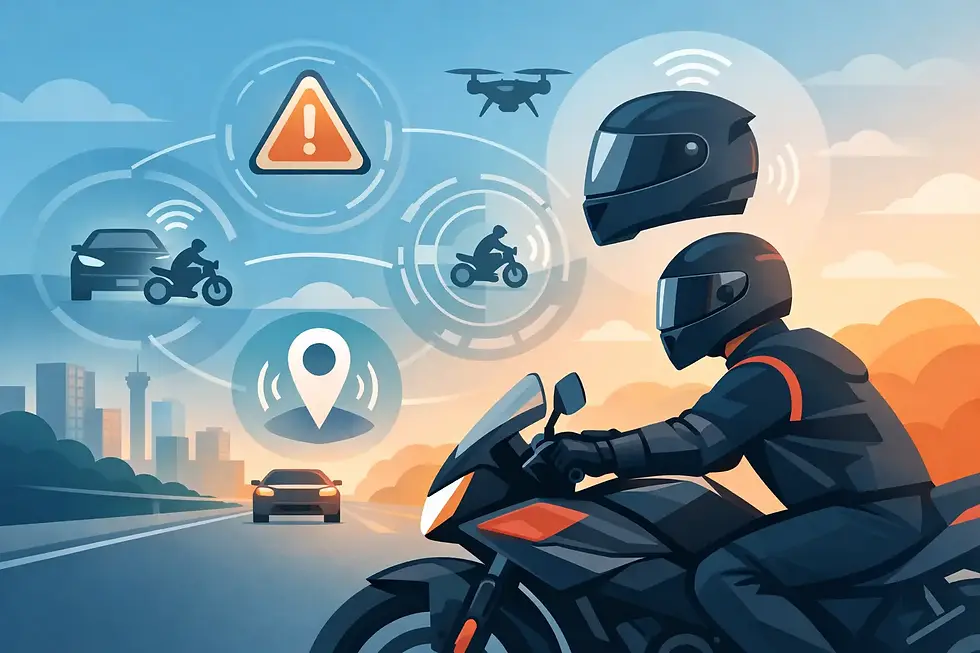
A motorcycle camera alert system uses front and rear cameras, onboard processing and rider-facing alerts to monitor traffic around the bike. Unlike a conventional dash camera, which mainly records what happened, an alert system is designed to assess what may happen next.
The system continuously reviews the movement, distance and relative position of nearby vehicles. When it identifies a relevant risk, it sends an immediate visual alert. Depending on the system and its configuration, this can include blind-spot activity, a forward collision risk, a dangerous overtake or unsafe following distance.
This distinction matters. Recording is valuable after an incident, particularly when you need evidence. Real-time warnings are valuable before an incident, when there is still time to adjust your road position, reduce speed, create space or delay a manoeuvre.
Why motorcycle-specific detection matters
Motorcycles do not behave like cars in traffic. They filter through congestion, change lane position for visibility, lean through bends and occupy less visual space in other drivers' mirrors. A rider assistance system needs to account for those conditions rather than simply applying car-based assumptions to a bike.
A properly designed motorcycle system uses wide-angle front and rear cameras to cover the areas riders need most. It also needs to distinguish between normal traffic movement and a developing hazard. A vehicle passing in the next lane is not automatically a threat. A vehicle moving into your blind area as you prepare to change lanes may be.
This is where camera placement, detection logic and alert timing work together. Alerts that arrive too late are of little use. Alerts that appear constantly can become distracting or be ignored. The goal is relevant, timely information that supports your own observation and judgement.
The most useful alerts on the road
Blind-spot warnings are especially useful in urban traffic and on multi-lane motorways, where cars can sit beside the bike with limited mirror visibility. Before moving across, a clear warning can prompt a second check and prevent an avoidable conflict.
Forward collision alerts can help when traffic compresses suddenly. They are not a replacement for maintaining space or reading the road ahead, but they can reinforce the urgency of a situation when a vehicle brakes sharply or a queue appears beyond a crest.
Dangerous overtake alerts address another common rider concern: a vehicle approaching or passing with little margin. Unsafe following-distance detection can also reveal when traffic behind is closing in, giving you time to avoid abrupt braking and plan a safer escape route.
Choosing the right motorcycle camera alert system
Not every camera kit is an alert system, and not every warning product is suitable for motorcycle use. Start by deciding what problem you want the technology to solve. If you only need ride footage, a basic front-facing camera may be sufficient. If you want active awareness of surrounding traffic, look for front and rear cameras with real-time hazard analysis.
Pay close attention to these four areas:
Motorcycle-specific design: The cameras, wiring, mounts and software should be built for motorcycle vibration, weather exposure and changing riding positions.
Visible, usable alerts: Warnings need to be easy to notice without forcing your eyes away from the road for too long. A cluttered display or unclear alert language defeats the purpose.
Onboard processing and privacy: Systems that process relevant information on the device can reduce dependence on constant connectivity and support a more privacy-conscious approach to ride data.
Recording and app support: Footage access, event recording and ride data should be straightforward to manage through a mobile app, without turning every journey into an administrative task.
Compatibility is also worth checking before purchase. Your bike's fairing layout, battery access, handlebar space and existing accessories can affect installation options. A naked commuter bike, an adventure bike with auxiliary lighting and a fully faired touring machine may each need a different mounting approach.
Installation affects detection quality
Even advanced safety technology depends on correct installation. Cameras must be mounted securely, aligned accurately and kept clear of obstructions. A camera aimed too high, too low or partly blocked by luggage can compromise the area it is meant to monitor.
The front camera should have a clear view of the road ahead, while the rear camera needs an unobstructed view of traffic approaching from behind. Cables should be routed away from moving parts, sharp edges and excessive heat. A clean installation is not just cosmetic. It protects the system and reduces the chance of intermittent power or signal issues.
Professional installation is a sensible choice if you are unfamiliar with motorcycle electrics or need a discreet, integrated result. Confident owners may be able to fit a compatible system themselves, but they should follow the supplied instructions carefully and test every function before relying on it in traffic.
After fitting, take a short, familiar ride. Check that alerts appear at the right time, that the display is visible in your normal riding position and that recording works as expected. Review the footage and adjust camera angles if needed. This initial setup is where the technology becomes part of your riding routine rather than another accessory on the bike.
Use alerts to improve decisions, not replace them
The best way to use a motorcycle camera alert system is as a second set of eyes. Continue to use mirrors, shoulder checks, road positioning and a safe following distance. The system should confirm risk or draw your attention to something you may not yet have seen.
For example, if a blind-spot alert appears as you are considering a lane change, pause the manoeuvre and verify the traffic position. If you receive a forward collision warning, look further ahead, ease off smoothly and increase your space. Avoid treating alerts as instructions to make sudden movements. Smooth, deliberate responses are safer and give other road users more time to react.
It is also sensible to learn how the system behaves in different conditions. Heavy rain, low sun, dense city traffic and winding rural roads all create different visual environments. Modern camera systems are designed for real riding conditions, but no detection technology can guarantee that every hazard will be identified in every situation.
Recording brings protection beyond the ride
Video recording is more than a useful extra. In the event of a collision, near miss or disputed incident, clear front and rear footage can help establish what occurred. That can be valuable when speaking with insurers, reporting dangerous driving or reviewing your own actions after a close call.
Ride data can be useful as well. Reviewing repeated alerts may reveal patterns in your routes or riding habits. Perhaps a particular junction regularly produces risky overtakes, or your commute contains a stretch where vehicles frequently follow too closely. That information helps you plan more defensively, alter your timing or choose a safer lane position.
Systems such as Ride Vision 2 Pro combine motorcycle-specific camera coverage, real-time threat detection, recording and app-connected ride insights in one integrated package. The benefit is not having separate devices competing for space, power and attention. It is having safety functions designed to work together around the rider.
Make the technology part of your pre-ride check
Before setting off, confirm that the system powers on, the lenses are clean and the rider display is visible. Road grime, insects and rain can reduce camera clarity, so wipe the lenses with a suitable soft cloth when necessary. Check mounts periodically, especially after rough roads, long-distance touring or winter storage.
Keep the app and system software current when updates are available. Improvements may refine performance, add compatibility or make footage management easier. At the same time, avoid changing settings while riding. Set your preferences before departure, then let the alerts support your attention where it belongs: on the road.
The strongest safety habit is still active observation. A camera alert system gives that habit better information at the moments when traffic becomes unpredictable. Fit it properly, understand its warnings and use every alert as a prompt to create more time and space around your motorcycle.


Comments