

Motorcycle Hazard Detection Cameras Explained
- Shiny Side Up Info
- Jul 6
- 6 min read

A car sitting in your blind spot is easy to miss when traffic compresses, weather turns, or your attention is split between lane position, road surface and the vehicle ahead. That is exactly where motorcycle hazard detection cameras earn their place. They do more than record footage. The right system watches the road around you in real time and alerts you when another road user becomes an immediate risk.
For riders, that difference matters. A basic action camera captures what happened after the fact. A rider-assistance camera system is built to help you react before a near miss becomes an impact. If you commute through heavy traffic, cover long motorway miles, or ride regularly in mixed urban conditions, that extra layer of awareness can make everyday riding feel more controlled.
What motorcycle hazard detection cameras actually do
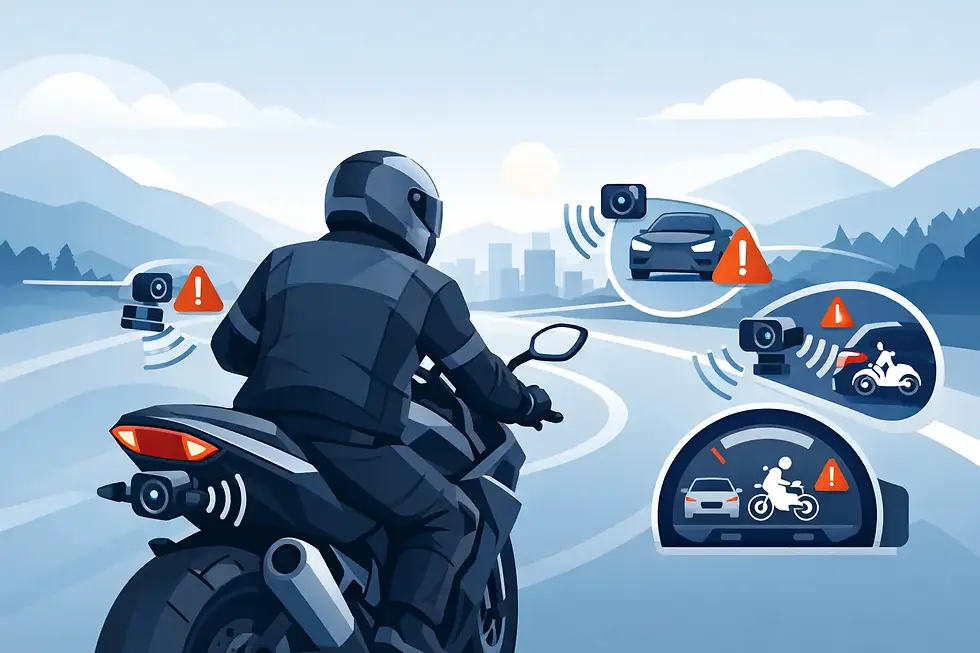
Motorcycle hazard detection cameras combine wide-angle front and rear cameras with onboard processing. Instead of simply storing video, the system analyses what is happening around the bike and looks for patterns that signal danger. That can include a vehicle moving into your blind spot, traffic closing too quickly ahead, a car approaching from the rear in a risky way, or an unsafe overtake developing beside you.
The key point is timing. Useful rider-assistance technology has to work in the moment, not ten seconds later and not only when you review footage at home. A proper motorcycle-first system delivers immediate visual alerts that help you make a better decision while you still have options.
That sounds straightforward, but it is where many riders become sceptical, and reasonably so. Motorcycles do not behave like cars. They lean, filter, accelerate differently and occupy road space in a less predictable way from the perspective of surrounding traffic. Any camera safety system that is adapted from automotive use can struggle if it does not understand those riding conditions.
Why motorcycle-specific design matters
A motorcycle creates a very different platform for safety technology than a car. Mounting points vary, vibration is higher, weather exposure is constant, and a rider cannot be expected to absorb dashboard-style warnings while balancing the machine and reading the road. The system has to be compact, clear and relevant.
That is why motorcycle hazard detection cameras need to be designed around real riding behaviour. Front and rear coverage must account for lean angle, changing traffic positions and the fact that threats often develop from the side as much as directly ahead. Alerts also need to be simple enough to register at a glance. If a warning demands too much interpretation, it starts competing with the rider's own observation instead of supporting it.
There is also the issue of trust. Riders will only keep using a system that feels accurate and useful. Too many false alerts and it becomes background noise. Too little sensitivity and it misses the moments that matter. The balance is not theoretical. It shapes whether a safety device becomes part of your routine or gets ignored after the novelty fades.
The hazards these systems are built to catch
Blind spots are the most obvious starting point. Many incidents happen because another driver drifts beside the bike and the rider has only a split second to notice. A camera-based detection system can monitor those side and rear zones continuously, including when your attention is naturally pulled forward.
Forward collision risk is equally important. On a bike, your stopping margin can disappear fast when traffic bunches unexpectedly. Hazard detection cameras that analyse closing speed can give an early alert when the gap in front is shrinking too quickly. That does not replace rider judgement or braking skill, but it can buy valuable reaction time.
Dangerous overtakes are another real-world problem, especially on faster roads and dual carriageways. A car or van moving past too close can force a rider to hold line with very little room for error. Rear and side monitoring helps identify that kind of approach before it becomes a surprise at shoulder level.
Unsafe following distances from vehicles behind are harder to manage, but they still matter. Riders often know when a vehicle is tailing too closely, yet they cannot always monitor it continuously while navigating the road ahead. A system that keeps watch to the rear can improve awareness and support better decision-making about lane position or when to let traffic pass.
Recording matters, but alerts are the real value
Many riders first look at safety cameras for evidence. That makes sense. If something goes wrong, recorded footage can help show what happened. It can support insurance claims, clarify fault, and document behaviour that is otherwise difficult to prove.
But evidence capture is only half the story. The stronger reason to fit motorcycle hazard detection cameras is that they analyse and alert while you ride. Recording protects you after an event. Detection aims to help you avoid the event altogether.
That distinction is worth keeping in mind when comparing systems. A low-cost camera setup may give decent video quality and little else. A more advanced rider-assistance unit adds real-time processing, threat recognition and purposeful alerts. If safety is the goal, that extra capability is not a luxury feature. It is the main feature.
What to look for in a system
Start with coverage. A useful setup needs both front and rear cameras, because risk does not arrive from one direction. Wide-angle visibility helps, but angle alone is not enough. The software behind the cameras needs to interpret movement and distance in a way that reflects actual riding conditions.
Then look at how the system alerts you. Visual warnings should be immediate and easy to understand without pulling focus from the road for more than a glance. Complexity works against safety on a motorcycle.
Installation is another practical factor. Riders own everything from sport bikes to tourers, nakeds and adventure machines. A system should fit different bike types without awkward compromise. If the hardware feels like an afterthought, reliability can suffer.
You should also consider where the data is handled. Privacy-conscious riders often prefer on-device processing rather than systems that rely heavily on constant external data transfer. That approach can feel more secure and more dependable, especially when mobile signal quality varies.
App support is useful as well, provided it stays practical. Ride footage, system settings and ride data can add value when they are easy to access and simple to understand. The app should support the riding experience, not turn the product into a gadget that demands constant management.
Where these cameras help most in daily riding
Commuters often get the clearest benefit because they face repeated exposure to dense traffic, hurried lane changes and poor observation from other drivers. In that environment, small risks stack up quickly. A warning about a blind spot vehicle or a fast-closing rear approach can reduce the number of surprises in a single journey.
Touring riders benefit in a slightly different way. Long hours in the saddle can wear down attention, even for experienced motorcyclists. Hazard detection cameras provide a consistent layer of monitoring when fatigue, weather and unfamiliar roads all increase workload.
They also suit riders who simply want more confidence without moving to a different type of machine. Not everyone wants a car-like cockpit full of intrusive systems. A motorcycle-specific camera setup can add modern assistance while keeping the riding experience direct and familiar.
The trade-offs riders should understand
No safety technology makes a rider invulnerable. Motorcycle hazard detection cameras support observation, but they do not replace mirrors, shoulder checks, roadcraft or space management. Riders still need to read traffic actively and ride defensively.
There is also a learning curve. Any alert system takes a little time to trust and interpret naturally. The best products reduce that adjustment period with clear warnings and intuitive setup, but it is still worth expecting a short familiarisation phase.
Cost is another factor. Advanced systems are more expensive than basic recording cameras because they do more. For some riders, that added spend is easy to justify if the bike is used daily or for high-mileage riding. For occasional weekend use, the decision may depend on how much value you place on active protection versus simple video evidence.
Rider Shield 360 Canada focuses on this category for a reason. Riders want technology that is built for the way motorcycles actually move through traffic, not a diluted version of a car system bolted onto a bike.
The strongest safety kit is the kit you keep using because it fits the ride, makes sense at a glance, and helps when the road gets unpredictable. If a camera system can watch what you cannot watch all the time, warn you early, and record what matters, it has already done more than a standard dash cam ever could. That is a practical step towards riding with better awareness every time you set off.


Comments